
Diamond Core Cutting in Dubai Professional Concrete Coring Services
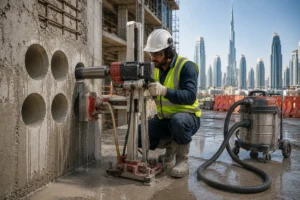
Concrete structures are designed to provide strength and long term stability, but construction and renovation projects often require precise openings through these strong materials. Plumbing pipes, electrical conduits, HVAC systems, drainage lines, ventilation ducts, and other building services may need to pass through concrete walls, floors, slabs, or other structural elements. In such situations, professional Diamond Core Cutting provides a precise and controlled solution.
For construction projects in Dubai, accuracy is especially important. A poorly positioned or incorrectly sized opening can create installation problems, increase project costs, and cause unnecessary damage to surrounding concrete. Professional core cutting helps contractors create openings according to the required diameter, depth, and location.
Special Core Cutting provides professional core cutting and concrete drilling services in Dubai and across the UAE. The company uses diamond tipped core drilling equipment for creating precise openings in concrete structures and also provides related services including wall sawing, slab sawing, floor saw cutting, beam cutting, lift cutting, AC duct cutting, and controlled demolition.
This guide explains what diamond core cutting is, how the process works, where it is used, what equipment is required, and why professional concrete cutting specialists are important for successful construction projects.
What Is Diamond Core Cutting?
Diamond Core Cutting is a specialized concrete cutting technique that creates circular openings through hard construction materials using a hollow cylindrical drill bit fitted with diamond segments.
The core bit rotates at controlled speed while gradually penetrating the concrete. Instead of pulverizing the entire area around the opening, the tool removes a cylindrical section from the material.
The removed section is commonly called the concrete core.
The diameter of the opening depends on the size of the core bit selected for the project.
Diamond core cutting can be performed on:
- Concrete walls
- Reinforced concrete
- Concrete floors
- Structural slabs
- Beams
- Columns
- Masonry surfaces
- Other hard construction materials
Special Core Cutting describes its core cutting process as a method for creating precise circular openings for utilities such as pipes, wires, and vents. Its service uses core drills with diamond tipped bits to penetrate hard materials accurately.
Why Diamond Core Cutting Is Used
Concrete is extremely resistant to ordinary drilling and cutting tools.
Diamond is one of the hardest materials available for cutting applications, which makes diamond tipped equipment highly suitable for hard construction materials.
A professional diamond core drilling system can provide several important advantages.
Accurate Circular Openings
The main advantage is the ability to create round openings with controlled dimensions.
This is important when the opening needs to accommodate a specific pipe, cable, duct, sleeve, or mechanical component.
Clean Cutting
A correctly selected core bit can produce a relatively clean and defined opening.
This can reduce the amount of additional finishing required around the hole.
Controlled Operation
Core drilling allows technicians to control the location and depth of the opening.
This is especially useful when working on existing buildings where unnecessary damage needs to be avoided.
Suitable for Reinforced Concrete
Specialized diamond core drilling equipment can be used on reinforced concrete when the appropriate equipment and drilling method are selected.
Special Core Cutting states that core cutting can be performed on reinforced concrete structures and that equipment, concrete hardness, operator skill, and bit condition can affect drilling performance.
Common Applications of Diamond Core Cutting
Diamond core drilling has applications across residential, commercial, industrial, and infrastructure projects.
Plumbing Pipe Installation
Plumbing systems frequently require pipes to pass through concrete walls and floors.
Instead of creating a large irregular opening, a core drill can create a circular opening appropriate for the required pipe or sleeve.
This is commonly useful during:
- Building renovations
- Bathroom installations
- Kitchen modifications
- Water supply projects
- Drainage installations
Electrical Conduit Installation
Electrical systems may require conduits to pass through concrete walls, floors, or slabs.
A precisely positioned core opening can provide a route for electrical services while limiting unnecessary concrete removal.
HVAC Installation
Heating, ventilation, and air conditioning systems often require openings through concrete structures.
Core cutting can be used for openings associated with:
- HVAC pipes
- Ventilation systems
- Air conditioning services
- Mechanical conduits
- Service penetrations
The required diameter should be determined according to the installation requirements before drilling begins.
Drainage Systems
Drainage pipes require carefully positioned penetrations through concrete structures.
Core drilling can create circular openings for drainage pipes and sleeves while maintaining a controlled opening size.
Fire Protection Systems
Commercial and industrial buildings may require sprinkler pipes and other fire protection systems to pass through concrete walls and slabs.
Professional core drilling can help create the required penetrations for these installations.
Communication Systems
Modern buildings contain extensive communication and data networks.
Cables and conduits may need to pass through concrete structures during installation or renovation.
Core drilling can provide controlled openings for these systems.
Diamond Core Cutting for Concrete Walls

Concrete walls can present significant challenges when contractors need to create openings for services.
Traditional breaking methods can create excessive vibration and irregular openings.
Diamond core drilling provides a more controlled approach.
The technician first identifies the required location and diameter. The drilling equipment is then positioned securely before the core bit begins penetrating the wall.
The process can be used for openings required for:
- Pipes
- Electrical conduits
- Ventilation
- HVAC systems
- Cable routes
- Sleeves
When working with structural walls, the proposed opening should be reviewed according to the project’s engineering requirements before drilling.
Diamond Core Cutting for Concrete Floors
Concrete floors and slabs frequently require service penetrations during construction and renovation.
Examples include openings for:
- Plumbing
- Drainage
- Electrical systems
- HVAC services
- Mechanical installations
- Sleeves
A core drill can create a circular opening through the required section of the floor.
The drilling position should be carefully measured before equipment operation begins.
Diamond Core Cutting for Reinforced Concrete
Reinforced concrete contains steel reinforcement designed to increase structural strength.
This reinforcement can make cutting more demanding.
Professional diamond core drilling equipment is designed for hard materials, but the operator still needs to understand the concrete condition and reinforcement layout.
Before drilling reinforced concrete, contractors should consider:
- Concrete thickness
- Reinforcement location
- Required hole diameter
- Required depth
- Structural importance
- Equipment capacity
Where necessary, concrete scanning can help identify reinforcement and other concealed elements before drilling.
Special Core Cutting also provides 3D concrete scanning services for identifying what is beneath concrete surfaces.
How Diamond Core Cutting Works
A professional core drilling project normally follows several stages.
Site Inspection
The technician first examines the location where the opening is required.
The inspection helps determine:
- Surface type
- Concrete thickness
- Required diameter
- Required depth
- Equipment access
- Possible reinforcement
- Nearby services
Measuring the Opening
The required hole diameter is established according to the installation requirements.
For example, a pipe installation may require a specific opening size to accommodate both the pipe and sleeve.
Accurate measurements help avoid unnecessary modifications later.
Marking the Location
The exact drilling point is marked on the concrete surface.
The technician checks the location carefully before positioning the equipment.
Scanning Where Required
For existing concrete structures, scanning may be recommended before drilling.
Scanning can help identify concealed reinforcement and other embedded elements.
This can be particularly important when drilling into structural slabs, walls, beams, or other reinforced components.
Positioning the Core Drill
The drilling equipment is positioned securely at the marked location.
Depending on the project, the equipment can be operated using different mounting arrangements.
Stable positioning is essential because movement during drilling can affect the accuracy of the opening.
Starting the Drilling Operation
The diamond core bit begins rotating and gradually penetrates the concrete.
The operator controls the drilling process and monitors the equipment throughout the operation.
Water Cooling
Water is often used during diamond core drilling to cool the cutting surface and help control dust.
Continuous water supply can also help maintain suitable operating conditions for the diamond bit.
However, water and concrete slurry must be managed properly, especially in finished indoor environments.
Controlling the Depth
The operator monitors drilling progress to achieve the required depth.
Some projects require a complete penetration through the concrete, while others may require a specific partial depth.
Removing the Concrete Core
Once the drilling is complete, the cylindrical concrete core can be removed from the opening.
The remaining hole is then inspected to ensure that it meets the required dimensions.
Cleaning the Work Area
The final stage involves removing concrete debris, water, and slurry from the work area.
Proper cleanup is particularly important for commercial buildings and finished properties.
Types of Diamond Core Drilling Equipment

Different project conditions may require different equipment configurations.
Handheld Core Drill
Handheld equipment can be suitable for smaller diameter openings and locations where a lightweight solution is practical.
The operator must maintain proper control throughout the drilling operation.
Rig Mounted Core Drill
Rig mounted systems provide greater stability and control.
They are particularly useful for larger diameter holes, deeper drilling, and demanding concrete applications.
Electric Core Drill
Electric equipment can be suitable for many indoor construction and renovation projects.
It can provide controlled operation without the emissions associated with fuel powered equipment.
Hydraulic Core Drill
Hydraulic systems can provide significant drilling power for demanding applications.
They may be appropriate for larger or deeper core drilling projects where additional power is required.
The final equipment selection should always be based on the hole diameter, depth, material, access, and project requirements.
Factors That Affect Core Cutting Performance
Several factors can influence the speed and quality of a core drilling operation.
Concrete Hardness
Harder concrete can require more time and an appropriate diamond bit.
Aggregate Type
Different aggregates can affect the cutting characteristics of concrete.
Reinforcement
Steel reinforcement may influence drilling speed and bit performance.
Hole Diameter
Larger openings generally require different equipment and may take longer to complete.
Drilling Depth
Deep drilling requires equipment capable of reaching the specified depth while maintaining stability.
Bit Condition
A worn or unsuitable diamond core bit can reduce drilling efficiency.
Operator Experience
The operator’s ability to control the equipment and respond to changing concrete conditions can affect the final result.
Benefits of Professional Diamond Core Cutting
Professional Diamond Core Cutting provides several advantages over conventional drilling and breaking methods. The main benefit is the ability to create controlled openings while limiting unnecessary damage to the surrounding concrete.
Precise Hole Diameter
A core drill uses a specific diameter bit to create a circular opening.
This makes it possible to prepare holes according to the requirements of:
- Plumbing pipes
- Electrical conduits
- HVAC systems
- Ventilation ducts
- Drainage pipes
- Mechanical services
- Cable sleeves
Accurate diameter selection is important because an opening that is too small may require additional cutting, while an oversized hole can create unnecessary gaps.
Clean and Controlled Openings
Diamond core drilling can produce clean circular openings compared with uncontrolled concrete breaking.
This is particularly useful when the opening will remain visible or needs to receive a pipe, sleeve, duct, or other building component.
Reduced Vibration
Core drilling is a controlled cutting process rather than an impact based breaking method.
Reduced vibration can be particularly beneficial when working near finished surfaces or existing structures where unnecessary disturbance should be minimized.
Suitable for Reinforced Concrete
Professional diamond core equipment can be used on reinforced concrete when the correct machine and diamond bit are selected.
The operator also needs to understand the reinforcement and concrete conditions before drilling.
Efficient Utility Installation
Modern buildings contain many services that need to pass through concrete structures.
Core drilling can provide accurately positioned openings for these installations, helping other contractors continue their work efficiently.
Diamond Core Cutting for MEP Services
Mechanical, electrical, and plumbing systems are among the most common reasons for creating openings in existing concrete structures.
A commercial building may require dozens or even hundreds of penetrations for different services.
These can include:
- Water supply pipes
- Drainage pipes
- Electrical conduits
- HVAC lines
- Fire protection systems
- Communication cables
- Ventilation systems
Accurate core drilling can help MEP contractors position these penetrations according to their installation drawings.
For large projects, the drilling locations should be coordinated carefully before work starts.
Core Drilling in Renovation Projects

Renovation projects often involve modifying an existing structure rather than constructing everything from the beginning.
This creates a different set of challenges.
Existing concrete may already contain:
- Reinforcement
- Embedded services
- Old pipework
- Electrical systems
- Structural components
When a new service needs to pass through the structure, a professional drilling plan becomes important.
For example, a property renovation may require a new drainage pipe through an existing concrete slab. Instead of breaking a large section of the floor, a correctly positioned core opening can provide the required penetration.
This can help reduce unnecessary demolition and make the renovation process more organized.
Core Drilling for HVAC Installations
HVAC systems frequently require penetrations through concrete walls, slabs, and floors.
Air conditioning pipes, refrigerant lines, ducts, and other mechanical components may need to pass between different areas of a building.
The required opening should be determined according to the dimensions of the installation and any required sleeve or clearance.
Professional drilling allows the contractor to create the opening at the required position and diameter.
Special Core Cutting also provides AC duct cutting and other concrete cutting services as part of its wider service range.
Core Drilling for Plumbing and Drainage
Plumbing installations often require multiple penetrations through floors and walls.
These openings may be required for:
- Water supply
- Wastewater pipes
- Drainage
- Soil pipes
- Ventilation pipes
- Plumbing sleeves
The correct hole diameter is important because the opening needs to accommodate the pipe and any required installation clearance.
Before drilling, the technician should confirm the exact position and dimensions with the plumbing contractor or project drawings.
Core Drilling for Electrical Services
Electrical conduits and cable systems may also require openings through concrete structures.
A core drill can create a controlled penetration for conduits or sleeves.
The drilling location should be checked carefully before work begins to reduce the risk of interfering with existing electrical systems or structural reinforcement.
Core Drilling for Structural Concrete

Structural concrete requires additional care because it may form an important part of the building’s load carrying system.
Examples include:
- Structural slabs
- Beams
- Columns
- Load bearing walls
A proposed opening in a structural element should not be treated as a simple drilling task.
The project should be reviewed according to the relevant engineering requirements before drilling begins.
Where necessary, scanning can help identify reinforcement and concealed elements.
Special Core Cutting lists concrete scanning among its services and explains that scanning can be used to identify what is beneath concrete surfaces before cutting or drilling.
Importance of Concrete Scanning Before Drilling
One of the most important considerations for existing concrete structures is understanding what is inside the concrete.
A concrete slab or wall may contain reinforcement, cables, pipes, or other embedded elements that cannot be seen from the surface.
Scanning technology can help technicians locate concealed features before drilling.
This information can help with:
- Selecting the drilling position
- Avoiding important reinforcement where possible
- Identifying concealed services
- Reducing unexpected drilling problems
- Improving project planning
For structural and commercial projects, scanning should be considered as part of the pre drilling assessment.
Water Management During Diamond Core Cutting
Water is commonly used during diamond drilling to cool the core bit and help control dust.
However, water mixed with concrete particles produces slurry.
Without proper management, slurry can spread across the working area.
This can create problems in:
- Offices
- Hotels
- Shopping centers
- Hospitals
- Finished buildings
- Parking structures
Professional technicians should therefore plan water containment and slurry collection before drilling starts.
Protective sheets, collection systems, wet vacuums, and suitable cleanup procedures may be used depending on the site.
Dry Core Drilling Considerations
Some projects may require dry drilling because water cannot be used in the working environment.
Dry drilling can be appropriate in certain applications, but dust management becomes particularly important.
The contractor should evaluate:
- Material type
- Hole diameter
- Drilling depth
- Indoor or outdoor location
- Dust control requirements
- Equipment limitations
The selected method should always be based on the specific site conditions.
How to Select the Correct Core Bit

Diamond core bits are available in different sizes and specifications.
The correct bit should be selected according to the project.
Important factors include:
Hole Diameter
The diameter must match the required opening.
Material
Concrete, reinforced concrete, masonry, and other materials may require different bit specifications.
Concrete Hardness
Hard concrete can require a diamond bit designed for demanding cutting conditions.
Reinforcement
Steel reinforcement can affect drilling performance and bit wear.
Drilling Depth
Deep holes may require longer drilling equipment and additional setup.
Using the appropriate bit can improve productivity and help achieve consistent results.
Signs You Need Professional Core Cutting
You may need professional core drilling when your project requires:
- A precise circular opening
- A specific hole diameter
- Drilling through reinforced concrete
- Deep concrete penetration
- Multiple service penetrations
- Openings near existing structures
- Controlled drilling with reduced vibration
- Professional water and slurry management
If the opening is part of a structural or commercial project, professional assessment becomes even more important.
Common Mistakes to Avoid
Drilling Without Checking the Structure
A concrete wall or slab may contain important reinforcement or embedded services.
The area should be assessed before drilling.
Choosing the Wrong Diameter
The hole should be sized according to the actual installation requirements.
Using Poor Quality Equipment
Low quality or unsuitable equipment can reduce productivity and affect the final opening.
Ignoring Water Management
Wet drilling without proper slurry control can create unnecessary cleanup and safety problems.
Applying Excessive Pressure
Forcing the core drill can affect equipment performance and diamond bit life.
The operator should maintain controlled pressure and allow the diamond bit to cut effectively.
Failing to Plan Core Removal
The extracted concrete core can be heavy, especially for large diameter holes and thick slabs.
The removal method should be considered before drilling begins.
How to Choose a Professional Diamond Core Cutting Company
Choosing the right contractor is important for achieving accurate results.
Check Experience
Look for a company with experience in concrete drilling, reinforced concrete, structural openings, and commercial construction.
Ask About Equipment
A professional contractor should be able to explain what type of core drilling equipment and diamond bits will be used.
Discuss Scanning
Ask whether scanning is required for your particular project.
Confirm Hole Dimensions
Provide the exact diameter and depth requirements before requesting a quotation.
Discuss Site Conditions
Tell the contractor whether the project is indoors, outdoors, on a floor, wall, slab, beam, or another structure.
Confirm Cleanup
Ask how drilling water, slurry, and extracted concrete cores will be handled after the work.
Why Choose Special Core Cutting for Diamond Core Cutting in Dubai?

Special Core Cutting provides professional concrete cutting and coring services in Dubai and across the UAE. The company lists core cutting, core drilling, wall sawing, slab sawing, floor saw cutting, beam cutting, lift cutting, AC duct cutting, window cutting, and demolition among its services.
Its core cutting process uses diamond tipped core drilling equipment and includes measuring and marking, drilling, cooling, depth control, core removal, and cleanup.
The company also states that it serves Dubai, Sharjah, Ajman, Abu Dhabi, and other UAE locations.
For a project requiring professional Diamond Core Cutting, this wider service capability can be useful when several different concrete cutting methods are required at the same site.
Frequently Asked Questions
What is Diamond Core Cutting?
Diamond Core Cutting is a specialized drilling process that uses diamond tipped cylindrical bits to create precise circular openings through concrete and other hard construction materials.
What can diamond core drilling be used for?
It can be used for plumbing, electrical, HVAC, drainage, ventilation, fire protection, communication systems, and other construction services requiring circular openings.
Can diamond core drilling cut reinforced concrete?
Yes. Professional diamond core drilling equipment can cut reinforced concrete when the appropriate equipment and diamond bit are selected.
What sizes of holes can be created?
Hole sizes depend on the available core bits and project requirements. The required diameter should be confirmed before equipment selection.
Is water used during core drilling?
Water is commonly used to cool the diamond bit and control dust during wet drilling. The resulting slurry needs to be managed properly.
Can core drilling be done without water?
Certain applications can use dry drilling, but the appropriate method depends on the material, equipment, site conditions, and dust control requirements.
Is concrete scanning necessary before core drilling?
Scanning can be important when drilling existing or structural concrete because it can help identify reinforcement and concealed services before drilling.
Can core drilling be used on concrete floors?
Yes. Core drilling can create precise openings through concrete floors and slabs for plumbing, drainage, electrical, HVAC, and other services.
Does core drilling cause vibration?
Core drilling is generally a controlled process and can produce less vibration than impact based concrete breaking. However, actual conditions depend on the equipment and material.
How long does Diamond Core Cutting take?
The time depends on the hole diameter, drilling depth, concrete strength, reinforcement, equipment, number of openings, and site conditions.
Conclusion
Professional Diamond Core Cutting provides a precise and controlled way to create circular openings through concrete walls, floors, slabs, and other hard construction materials. It is widely useful for plumbing, electrical, HVAC, drainage, ventilation, fire protection, and other building services.
For construction and renovation projects in Dubai, choosing an experienced specialist can make the drilling process more efficient and predictable. Special Core Cutting provides professional core cutting and related concrete cutting services throughout Dubai and other UAE locations.
Whether you need a single opening for a pipe or multiple penetrations for a large MEP installation, professional diamond core drilling can provide the accuracy required for modern construction projects.
Get Professional Diamond Core Cutting in Dubai

If your construction, renovation, plumbing, electrical, HVAC, or MEP project requires accurately sized openings through concrete, professional Diamond Core Cutting can provide a controlled and efficient solution.
Special Core Cutting can assess the project requirements and determine the appropriate drilling method, equipment, diamond bit, and site preparation.
For best results, provide the contractor with the required hole diameter, depth, number of openings, location, and type of concrete before the work begins.